
Dr Anna Horwood
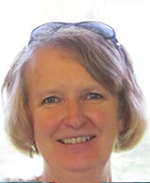 Current Role: I am a Principal Research Fellow in the School of Psychology & Clinical Language Sciences at the University of Reading
Background: I am an orthoptist by profession and have taught both theoretical and clinical orthoptics for many years. I moved into research in the 1990’s, based in a psychology department, which has given me the opportunity to broaden my research horizons beyond my professional speciality. I still retain a small clinical and teaching workload at the Royal Berkshire Hospital in Reading, which ensures that my research remains grounded in clinical practice.
Clinical/academic interests: My main clinical interest is in mainstream “bread and butter” orthoptics i.e. squint and other common children’s vision defects, and how these very complex problems are investigated, treated and communicated to those they affect. I have been External Examiner on undergraduate and post-graduate Orthoptics degrees at both Sheffield & Liverpool Universities and have also taught optometrists in Norway. I am involved with national and international bodies which promote research among orthoptists, ophthalmologists and optometrists. I am a National AHP Clinical Expert in Paediatrics and a HCPC Partner as an International Registration Assessor.
Research interests: I am particularly interested in how the eyes focus for close work. This seemingly simple process actually involves complex interactions between neuroscience, anatomical, optical and developmental factors. Abnormalities in any or all of these factors are can lead to squints, eyestrain or a need for glasses. My PhD was on the development visual focusing in infants, and over the years we have been developing a new model to explain many clinical problems. I am a regular contributor and reviewer for major international journals and have had many invitations to speak on my research around the world. I have received funding from NIHR, MRC and Fight for Sight, have been awarded four international prizes.
Motivations for mentoring: Members of small professions often have to carry out their research in departments where they are in a minority. Many, as I do, also juggle pure research and clinical work for the benefit of the patient. This can be stimulating and broadens horizons beyond professional boundaries; but being specialised can also be isolating. I have received great support from non-orthoptic colleagues and mentors over the years, but even so, there are things that in hindsight I might have done differently, much earlier, or more strategically. External mentors provide a valuable role in confidence building, helping to get a wider perspective and providing support at the right time, independent from the supervisor/junior relationship.
My mentoring style: I see the mentoring role is to be an independent sounding board and facilitator. If things are going well, a mentor can reinforce and encourage success; or sometimes allow the mentee to see that things could be even better – or different. If there are problems, an independent ear often helps the mentee find the best way ahead without the “baggage” of local politics and relationships.
Last three publications:
Horwood A, Riddell P. Hypothetical Models of Disparity- vs Blur-Driven Accommodation and Convergence in Children and Adults: Normal, Strabismic and Presbyopic. JAAPOS Dec 2014; 18; 576-583
Horwood A, Toor S, Riddell P. Screening for convergence insufficiency using the CISS is not indicated in young adults. Brit J Ophthalmol February 2014 DOI 10.1136/bjophthalmol-2013-304533
Horwood, A, Toor,S , Riddell P Change in Convergence and Accommodation After Two Weeks of Eye Exercises in Typical Young Adults JAAPOS 2014. Published online 28 Feb 2014 http://dx.doi.org/10.1016/j.jaapos.2013.11.008