
Rachel Elliott
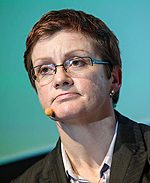 Current Role: I was appointed Lord Trent Professor of Medicines and Health at the School of Pharmacy, at the University of Nottingham in 2007.
Background: I am a hospital pharmacist and a health economist. I worked in the NHS from 1989 to 2007. I have been working in academic health services research since 1996. I have a high success rate in obtaining research funding and quality peer-reviewed publication of policy and practice-relevant health research. I have supervised and line-managed a wide range of clinical and academic individuals at a range of stages of their career, including pre- and post-doctorate researchers. I have run a clinical Masters degree course and worked in a US academic institution.
Research interests: I have developed a programme of methodologically robust, theoretically driven and policy-relevant research using the application of applied health economics and economic evaluation to medicines policy, prescribing and consumption. My current research focus is the design and evaluation of complex interventions to improve medicines safety and adherence. I routinely work with multidisciplinary teams involving service providers and patients and use a range of research methods. I have well established research and policy networks.
Clinical / academic interests: I am a member of NICE, and the Health Services Research Network (HSRN) Executive Board. I contribute to health policy debate in the UK and overseas. My combined health economics, health services research, pharmaceutical training and clinical practice backgrounds allow me to contribute across the research-practice divide in a relatively unique way.
Motivations for mentoring: My training, experience and application is a synergistic relationship that provides me with a unique perspective of the challenges for a clinically trained individual wanting to move into health services research, academic practice and policy/decision-making circles. I have experienced the highs and lows of developing a career in health services research. I see effective mentoring as an essential component of expanding the clinical-academic workforce for the future.